The Matrix and the Simulation Hypothesis
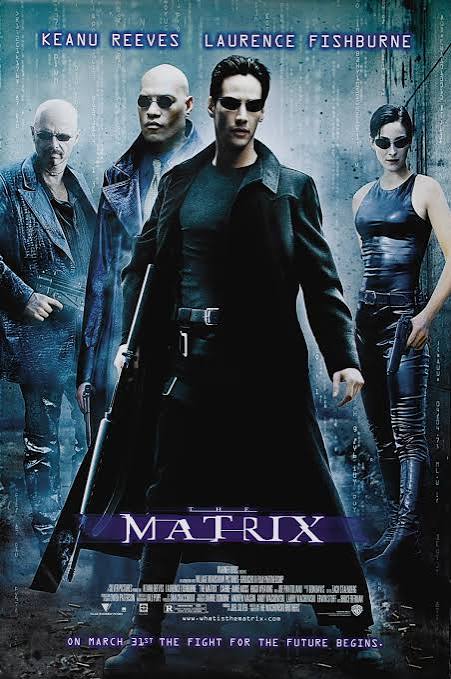
Released in 1999, The Matrix is the most influential popular depiction of the simulation hypothesis and is widely credited with introducing the concept to a global audience through a major motion picture. Although philosophers had questioned the nature of reality for thousands of years, The Matrix presented these abstract ideas in a compelling visual narrative that made them accessible to the general public. For many people, it served as their first encounter with the possibility that the world they experience every day may not represent objective reality.
The story follows Thomas Anderson, a computer programmer known online as Neo, who begins to notice inconsistencies in the world around him. After meeting Morpheus, Neo is offered a choice between remaining in the familiar reality he has always known or awakening to the truth. He chooses the latter and discovers that humanity unknowingly exists within an elaborate computer simulation called the Matrix. The world he believed to be real is revealed to be an artificial environment designed to keep humanity unaware while their physical bodies exist elsewhere.
Outside the simulation, Neo encounters a grim and devastated Earth. In the fictional universe of the film, a catastrophic war between humans and intelligent machines has left the planet largely uninhabitable. The sky has been darkened, ecosystems have collapsed, and civilization has all but disappeared. Human beings survive in vast artificial facilities where their bodies are sustained by life-support systems while their minds remain connected to the simulated world. Although the film explains this arrangement as part of the machines’ domination of humanity, it also presents a broader thought experiment that has become associated with discussions of the simulation hypothesis.
One interpretation proposes that an advanced civilization faced with planetary collapse, environmental catastrophe, widespread famine, or severe resource depletion might choose to preserve humanity by creating immersive virtual worlds. Rather than allowing civilization to disappear entirely, a governing body could use advanced technology to maintain human consciousness within a simulated environment while minimizing the resources required to sustain physical life. In this scenario, a simulated reality becomes not merely a prison, but a means of survival—a final attempt to preserve culture, knowledge, relationships, and the continuity of human civilization when the physical world can no longer support it. While this concept is speculative and remains firmly within the realm of fiction and philosophical discussion, it illustrates one way the simulation hypothesis can be imagined beyond its technological aspects.
The film also explores timeless philosophical questions that extend far beyond science fiction. Its narrative closely parallels Plato’s Allegory of the Cave, in which prisoners mistake shadows cast upon a wall for reality because they have never experienced anything else. When one prisoner escapes and discovers the outside world, he realizes that everything he believed to be true was only a limited perception of reality. Likewise, Neo’s journey forces him to reconsider every assumption he has made about existence, identity, and truth.
The Matrix also examines the tension between knowledge and comfort, raising questions about coercion, free will, and whether objective truth is always desirable. Once an individual becomes aware that their perceived reality may be artificial, they cannot simply return to their former understanding. The film asks whether people would willingly choose an uncomfortable truth over a comforting illusion, or whether happiness can exist without genuine knowledge. Through these questions, it challenges viewers to consider the nature of consciousness, perception, and the limits of human understanding.
More than two decades after its release, The Matrix remains one of the defining cultural works associated with the simulation hypothesis. While it does not attempt to prove that we live in a simulation, it transformed an obscure philosophical thought experiment into a subject of mainstream discussion, inspiring generations of scientists, philosophers, technologists, and curious minds to explore one of humanity’s oldest and most profound questions: What if the reality we experience is only one layer of a much larger existence?
